Why matching a Toyota transmission to your build is harder than it looks
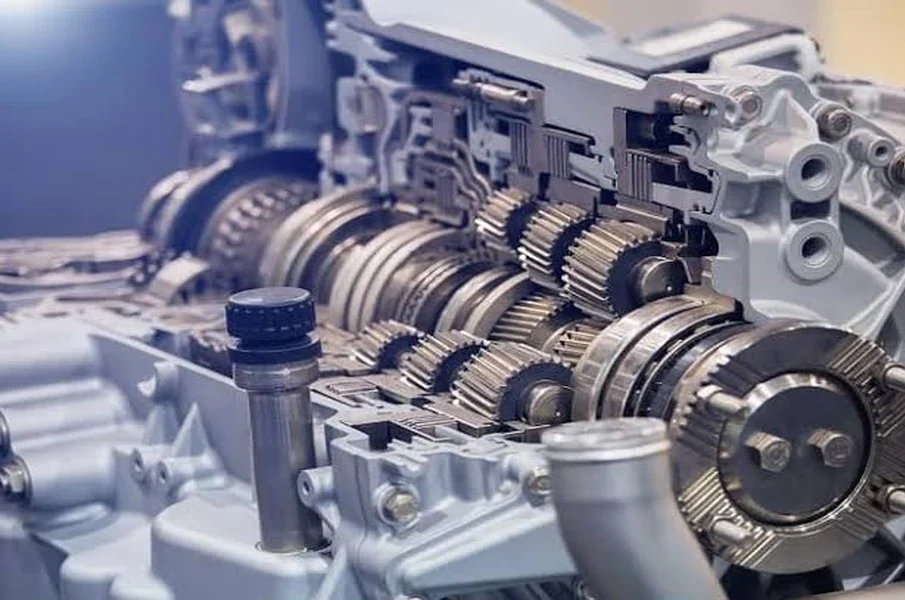
The engine gets all the attention, so the transmission becomes an afterthought, and that afterthought is where a Toyota build quietly falls apart. A gearbox that cannot handle the torque, or bolts up but spins the wrong gear ratios for the application, turns a promising swap into an expensive lesson in drivetrain compatibility.
Toyota complicated this on purpose. Across the RWD performance lineup, the company fielded a range of manual and automatic transmissions with different bellhousing patterns, input shafts, torque ratings, and gear spacing. Picking the right one is not a matter of finding something that physically attaches. It is a matter of matching torque capacity, ratios, and driveline geometry to what the engine actually produces and what the car needs to do.
The torque capacity problem
Every transmission has a practical torque limit, and exceeding it destroys gears, synchros, or the case itself. This is the first filter, and it eliminates more options than people expect.
Where the common choices sit
The W58, found behind naturally aspirated Supras and other RWD Toyotas, is a durable unit for moderate power but becomes the weak link once boost enters the picture. The R154, Toyota’s stouter five-speed, handles considerably more torque and became the default upgrade for turbocharged 1JZ and 2JZ builds for exactly that reason. Past the R154’s ceiling, builders move to the V160 and V161 six-speeds, the Getrag-sourced units behind the twin-turbo Supra, which tolerate serious power but command serious prices.
Anyone shopping for JDM Toyota transmissions needs to know which tier their build falls into before browsing, because a W58 priced attractively is no bargain if the engine will grenade it in a season. Match the unit to the torque first, then worry about cost.
The gear ratio problem
Torque capacity keeps the transmission alive. Gear ratios determine whether the car is pleasant or miserable to drive. A transmission rated for your power can still be the wrong choice if its ratios do not suit the engine’s powerband and the car’s intended use.
Powerband and final drive interaction
An engine that makes power high in the rev range wants closely spaced gears to keep it in that band. A torquey turbo motor tolerates wider spacing because the boost fills the gaps. The transmission’s internal ratios interact with the differential’s final drive, so the same gearbox behaves differently in two cars with different rear ends. A ratio set that feels perfect for a track car leaves a street car buzzing at highway speed, and the reverse leaves a track car falling out of boost between corners.
This is why copying someone else’s transmission choice without understanding their combination leads to disappointment. Their final drive, tire diameter, and power delivery may differ from yours enough to flip the outcome.
The automatic question
Not every build wants a manual. Toyota’s A340 and related automatics served heavier applications and, in built form, handle substantial torque while surviving abuse that punishes a manual’s clutch. For drag-oriented builds or drivers who simply prefer two pedals, a properly prepared automatic is a legitimate choice rather than a compromise. Many of these units were engineered and manufactured by Aisin, whose transmissions appear across a huge range of Toyota vehicles, which helps parts availability.
The automatic path trades some efficiency and driver engagement for consistency and, in high-power drag use, for the ability to put power down without a clutch to abuse. The point is that the manual-versus-automatic decision should follow from how the car will be used, not from reflex.
The supporting hardware nobody budgets for
Choosing the transmission is only part of the job. The bellhousing pattern has to match the engine, the input shaft has to match the clutch, and the clutch has to match both the torque and the pressure plate. Swap in a stronger transmission and you often need a matching clutch and flywheel rated for the same power, because the weakest link in the driveline is where failure lands. A properly chosen R154 behind a boosted 2JZ still fails early if it is paired with a worn clutch that slips under load and cooks the pressure plate.
The details that bite later
Driveshaft length changes between transmissions, so a swap frequently requires a different or modified driveshaft to fit. Shifter location can move, meaning the console and linkage may not line up without work. Speed sensor type and wiring differ across units, which matters for a functioning speedometer and, in some cars, for the engine management. None of these are dealbreakers, but each is a cost and a task, and buyers who priced only the transmission get surprised by a bill that grew to include a clutch, a flywheel, a driveshaft, and an afternoon of sorting the shifter.
Build the budget around the complete drivetrain change, not the transmission in isolation. The gearbox is the centerpiece, but the supporting parts determine whether the swap actually works when you turn the key.
Solving it in the right order
Work the problem in sequence and it stops being intimidating. Start with honest power figures for the engine, including future plans, because building around today’s number and upgrading the engine next year means buying the transmission twice. Filter to units that comfortably exceed that torque. From the survivors, choose ratios that suit the powerband, final drive, and intended use. Only then compare prices and availability.
Do it in that order and the field narrows to a sensible short list. A moderate naturally aspirated build lands on a W58 without drama. A turbo 2JZ pushing real power lands on an R154 or steps up to a V160 if the budget and power justify it. A drag automatic build lands on a built A340. Each answer flows from the requirements rather than from what happened to be cheapest on the day.
Buying used adds one more layer to the sequence: condition. A transmission that matches your torque and ratios perfectly is still a bad purchase if its synchros are worn or its bearings are noisy. Confirm the unit was tested or is backed by a warranty, and treat a fresh clutch as part of the install rather than an optional extra. A used transmission from a reputable importer, verified and guaranteed, removes the main risk of buying a drivetrain component you cannot open up before installation.
The transmission is not the glamorous part of a Toyota build, but it is the part that transmits everything the engine makes to the ground, and a mismatch here undoes the money spent everywhere else. Choose it deliberately, match capacity and ratios to the actual application, and the drivetrain becomes a strength instead of the component you replace after it fails. Buyers who respect that sequence build cars that drive the way they imagined. The ones who treat the gearbox as an afterthought build cars that spend more time on jack stands than on the road.